This article was originally written on the 2nd May 2024
Formula One is currently neck-deep in the Max Verstappen era of dominance. The Dutchman has easily swept away the competition for the last two seasons and is the clear favourite for the championship again this season. While the sport has historically been defined by its periods of one team being dominant, the period we are currently in feels disturbingly different. It almost seems like we’ve pencilled in the winner of every future championship until the next big regulation shakeup in 2026. But why is everyone so devoid of hope for a change in the current status quo? Why does everyone immediately deem a race where Verstappen somehow doesn’t win an “instant classic”, even if the on-track action is subpar? Why are Red Bull and the three-time world champion seemingly ten steps ahead of everyone else?
The 2022 season brought with it the new generation of ground-effect cars, designed to maximise overtaking. Red Bull capitalised massively on the new technical requirements. While other teams were trying to understand the new rules and struggling with “porpoising”, Red Bull managed to find the sweet spot. Running the car as low as possible to maximise performance without suffering the side effects that other teams were plagued with. Combine that with design genius Adrian Newey’s usual brilliance, Red Bull have done a brilliant job at a task where the best anyone else did was only satisfactory. Ferrari were close initially, but reliability issues stopped them from ever truly being a match.
This isn’t anything new though, Mercedes kickstarted their reign of dominance by mastering the 2014 turbo hybrid regulations. The difference here is that the gap between Mercedes and the rest of the field was eventually closed by Ferrari and Red Bull. Thanks to the current engine development freeze that was perfectly timed when Honda (manufacturers of Red Bull’s engines) produced the best engine on the grid, and the cost cap preventing the automotive giants from spending their way to performance, Red Bull’s competitive edge seems here to stay.
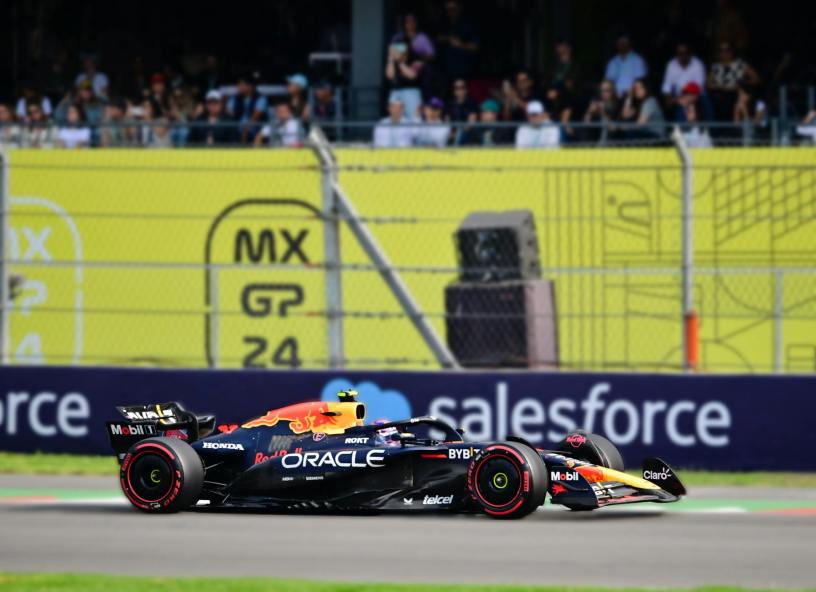
Turning to the matter of drivers, a big reason often put forward for Verstappen’s constant winning is the lack of competition from his team. Sergio Perez is a fine driver, his six race wins are a testament to that, but it is abundantly clear that he is not at the same level as Verstappen. Perez is the clear number two driver at Red Bull, which is a genuine tactical decision you can’t blame them for. There is clearly less tension in a team when the two drivers aren’t constantly fighting for either race wins or the championship itself, as has been the case historically at many teams. But when the car is so far ahead of everyone else, it is a touch depressing when the drivers of said car are similarly apart in pace.
Historically, Red Bull’s decision to have this designation of their drivers is vindicated when you see the explosive relationships between Prost and Senna at McLaren, or Hamilton and Rosberg at Mercedes. But even when dominant teams had a clear number one driver, such as Michael Schumacher’s Ferrari days, there were at least seasons where other teams could match their performance and offer a genuine challenge. With Verstappen, most races just become forgone conclusions.
Another thing to consider is that the current landscape of Formula One allows for one team to dominate more easily than in the past. The reason for this is the reliability of cars in the modern era of the sport. In seasons gone by, it was not uncommon for nearly ten cars to retire from a race due to mechanical problems. However, now that the engines are so well understood, retirements of this nature are now few and far between. Naturally, Red Bull have hugely benefitted from this. Not only are they the fastest team, they’re also the most reliable. Since 2022, they have only suffered four retirements from technical issues. To make it worse, two of those came in the very first race of that timespan, and they had absolutely none in 2023. No matter how dominant teams and drivers may have been in the past, you could at least rely on mechanical hindrances to occasionally hamper their chances of cruising to victory. With Red Bull and Verstappen, there is no hope. It’s no wonder Verstappen’s first retirement in two years at the 2024 Australian Grand Prix had neutrals jumping for joy.
There is little to doubt about Verstappen. He is clearly one of the greatest drivers of all time, driving for one of the greatest constructors of all time, but the vigour of his iron grip that he currently has Formula One in is incomparable and at times ludicrous. The best-case example of this was the 2022 Belgian Grand Prix. Despite receiving grid penalties causing the Dutchman to start from all the way down in 14th on the grid, everyone still believed he would win easily. By only the twelfth lap, he had taken the lead and cruised to victory. No matter how much hope other teams and drivers may give out, it seemingly always ends with the Dutch national anthem bellowing out of the Tannoy system on Sunday afternoons.

